Transforming an old wood vanity table can breathe new life into your space, turning a dated piece into a stylish focal point. Many shy away from such projects, envisioning hours of messy sanding and dust. However, with the right techniques and materials, you can achieve a stunning, durable finish on your vanity table without ever picking up a piece of sandpaper. This guide will walk you through the entire process, making furniture revitalization accessible and enjoyable for everyone.
Understanding the “No-Sanding” Approach for Your Vanity
Painting furniture without sanding might sound like a shortcut, but it’s a legitimate and increasingly popular method. This approach leverages modern paint and preparation products designed to adhere exceptionally well to existing finishes, eliminating the need for abrasive sanding. For a vanity table, which often has intricate details and hard-to-reach areas, skipping the sanding step is a game-changer, saving significant time and effort while minimizing dust and mess. This allows you to focus on the creative aspects of your makeover.
Essential Preparation Steps for a Flawless Finish
Even without sanding, thorough preparation is the bedrock of a successful paint job. Neglecting these initial steps can lead to peeling, chipping, and an overall subpar result, so invest your time wisely here.
Cleaning is Non-Negotiable
|
Our Picks for the Best Vanity Table in 2026
As an Amazon Associate I earn from qualifying purchases.
|
||
| Num | Product | Action |
|---|---|---|
| 1 | BOLUO Small Vanity Desk with Hollywood Mirror and Lights, Girls Vanity with Stool, Fluted Vanity Set, Compact Make Up Table with Drawers and Outlet Bedroom |

|
| 2 | 43" Fluted Makeup Vanity Desk with 32" Mirror and Lights, Modern Glass Top Large Vanity Table with 5 Drawers and 3 Storage Shelves, Dressing Table Set with Charging Station for Bedroom-Gray |
|
| 3 | SUPERJARE 35.4" White and Gold Desk with 2 Drawers, Modern Makeup Vanity with Padded Stool, Small Computer Desk Home Office Desk for Writing Study Bedroom |
|
| 4 | Kitsure Vanity Desk with Mirror and Lights - Large Capacity Makeup Vanity with 4 Fabric Storage Drawers & 3 Lighting Modes, Vanity Table Set with Sturdy Metal Frame for Bedroom, White, 35" x 17" x 52" |
|
| 5 | Large Vanity Desk with 3 Color Touch Screen Dimming Mirror, Vanity Desk with Charging Station, Modern Retractable Makeup Dressing Table, Makeup Table With storage shelves and 5 Sliding Drawers, Black |
|
| 6 | Large Vanity Desk with 3 Color Touch Screen Dimming Mirror, Vanity Desk with Charging Station, Modern Retractable Makeup Dressing Table, Makeup Table With storage shelves and 5 Sliding Drawers, Walnut |
|
| 7 | Black,Vanity Desk with Mirror and Lights,Makeup Vanity with Power Outlet and Adjustable Cabinet,Modern Makeup Table with 3 Drawers for Bedroom Makeup Room |
|
| 8 | Vanity Desk with 29.53" HD Lighted Mirror, 47.24" Big Modern Vanity Desk with Mirror and Lights, Makeup Vanity with 5 Drawers and Storage Shelves and Charging Station, Oak2 |
|
| 9 | 47.24" Big Modern Vanity Desk with Mirror and Lights,Makeup Vanity Desk with 5 Drawers and Storage Shelves & Power Outlet,Dressing Table with Glass Top, Oak |
|
| 10 | 57“Makeup Vanity Desk with Mirror and Lights, Vanity Desk with 5 Drawers & Storage Shelves, Vanity Table with Power Outlet, 3 Color Modes & Adjustable Brightness Dressing Table, Bedroom,Oak |
|
Begin by removing all hardware, such as knobs and pulls, and any drawers or removable shelves from your vanity. This ensures you can access every surface and prevents paint from accidentally adhering to components you might want to reuse or replace. Next, a deep clean is crucial. Dust, grime, oils from makeup, and hair products accumulate over time, creating a barrier that paint cannot penetrate effectively. Use a strong degreaser or cleaner like Simple Green or TSP (trisodium phosphate) diluted according to package instructions. Wipe down every surface thoroughly with a clean cloth, frequently rinsing the cloth to avoid reapplying dirt. Finish with a wipe-down using clean water to remove any cleaner residue, and let the vanity dry completely.
The Power of Liquid Deglossers
For vanity tables with a glossy, slick, or varnished finish, a liquid deglosser (sometimes called “liquid sander”) is your secret weapon. This chemical solution etches the existing finish, creating a microscopically rough surface that paint can grip onto, effectively doing the job of light sanding without the mess. Apply the liquid deglosser with a clean cloth, following the product’s instructions carefully, usually working in small sections. This step ensures superior adhesion, especially on older, slick wood finishes, making the paint much less likely to scratch or peel.
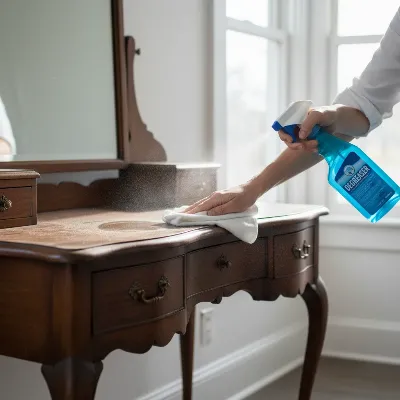 A woman thoroughly cleaning an old wood vanity table with a degreaser solution and a cloth, removing grime before painting, in a well-lit room, realistic style
Repairing Minor Imperfections
Before any paint touches your vanity, take a moment to address any dents, scratches, or minor chips in the wood. Small imperfections can become glaringly obvious once painted, especially under a fresh, smooth coat. Use wood filler for deeper gouges or cracks, applying it sparingly and smoothing it flush with the surface. Allow the filler to dry completely according to the manufacturer’s instructions, then gently smooth it with a fine-grit sanding sponge or block if necessary. For loose joints or wobbly legs, reinforce them with wood glue and clamps, ensuring the structure is sound before painting begins.
Choosing the Right Paint and Primer for No-Sanding Projects
The success of a no-sanding project largely hinges on selecting the appropriate primer and paint. Not all paints are created equal when it comes to adhesion on un-sanded surfaces.
When to Prime (and What Kind)
While the “no-sanding” method implies minimal prep, a primer is often a critical step for longevity and a professional finish, particularly for a vanity table that sees daily use. You should always prime if you are:
- Painting over a very glossy or slick finish (even after deglossing, an extra layer of primer offers insurance).
- Switching from a dark wood or paint color to a significantly lighter one, to prevent bleed-through and achieve true color faster.
- Dealing with raw wood, especially if it has knots that can bleed sap or tannins through paint.
- Painting latex paint over an existing oil-based finish, as they are incompatible without a proper barrier.
Look for high-quality “bonding primers” or “stain-blocking primers.” These are formulated to adhere exceptionally well to challenging surfaces and block any stains or tannins from seeping through your topcoat. Water-based options are generally easier to clean up and have lower VOCs.
Top Paints for Sand-Free Application
Several paint types excel in no-sanding scenarios, offering both excellent adhesion and a beautiful finish:
- Chalk Paint: Extremely popular for furniture, chalk paint is renowned for its matte finish and remarkable adhesion to almost any surface without sanding or priming. It’s forgiving and creates a soft, velvety look, often associated with farmhouse or shabby chic styles. However, chalk paint is porous and requires a protective top coat, typically wax or a water-based polycrylic, for durability. While wax offers a beautiful sheen, it is less durable against moisture and heavy use compared to polycrylic.
- Mineral Paint: Similar to chalk paint in its no-sanding properties, mineral paint often offers a more durable, low-sheen finish from the start, frequently eliminating the need for a separate topcoat in many applications. It’s known for its excellent adhesion and harder finish, making it a robust choice for frequently used pieces like vanity tables.
- Furniture-Specific Paints: Many major paint brands now offer “all-in-one” furniture paints or cabinet paints specifically formulated for high adhesion and durability over existing finishes with minimal prep. These paints are often self-leveling, which helps minimize brush marks, and may contain a built-in primer, simplifying the process even further.
> “The secret to a lasting no-sanding paint job isn’t just about the paint, but the meticulous preparation and the strategic use of bonding primers to create an unbreakable foundation.” – Sarah Jenkins, Professional Furniture Restorer
Step-by-Step Guide to Painting Your Vanity Without Sanding
With your vanity prepped and your materials chosen, it’s time for the exciting part: painting! Following these steps will help you achieve a smooth, professional-looking finish.
Setting Up Your Workspace
Good ventilation is essential when painting, especially when using deglossers, primers, and paints. Work in a well-ventilated area, preferably outdoors or in a garage with open windows and a fan. Lay down drop cloths or old sheets to protect your floors and surrounding areas from paint drips. Elevate your vanity table on painter’s pyramids, blocks of wood, or old cans. This allows you to paint the bottom edges easily and ensures even drying without sticking to the drop cloth.
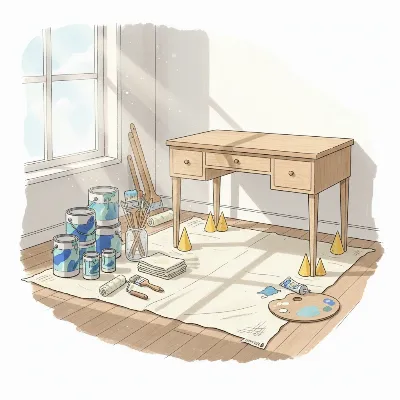 A beautifully organized workspace for painting a vanity table, with drop cloths, paint cans, brushes, and the vanity elevated on painter's pyramids, bathed in natural light, illustrative style
Applying Primer (If Needed)
If your chosen paint doesn’t have a built-in primer or your vanity’s condition warrants it, apply your bonding or stain-blocking primer. Use a high-quality synthetic brush for detailed areas and a foam roller for flat surfaces to achieve the smoothest finish. Apply primer in thin, even coats, working quickly and maintaining a “wet edge” to avoid visible brush or roller marks. Allow each coat to dry completely according to the manufacturer’s instructions before applying the next. Two thin coats are usually more effective than one thick coat.
Painting Techniques for a Smooth Finish
Now for the main event! Whether you’re using chalk paint, mineral paint, or a furniture-specific paint, apply it in thin, even coats.
- Brushing: For intricate details or edges, use a good quality synthetic brush. Dip only the tip of the bristles into the paint and apply with long, smooth strokes. Avoid overworking the paint; brush marks become more prominent if you brush over paint that’s already starting to set.
- Rolling: For larger, flat surfaces like the vanity top or sides, a dense foam roller is ideal for achieving a smooth, almost spray-like finish without brush strokes.
- Spraying: For the most professional, factory-smooth finish, a paint sprayer is an excellent investment. Always dilute your paint according to the sprayer’s recommendations and practice on a scrap piece of wood first.
Allow each coat of paint to dry thoroughly before applying the next, typically 2-4 hours, or as advised by the paint manufacturer. Most projects require two to three thin coats for full, opaque coverage.
The Critical Top Coat Application
For a vanity table, which often endures daily use, spills, and cosmetic products, a durable top coat is non-negotiable. It provides essential protection, guards against chips and scratches, and makes the surface easy to clean.
- Polycrylic vs. Polyurethane: Both are excellent clear top coats. Polycrylic is water-based, dries clear without yellowing (ideal for white or light colors), and is easy to clean up. Polyurethane is typically oil-based, very durable, but can yellow over time, making it better suited for darker colors or where a slight ambering is desired. Given the user’s preference for vanity tables, polycrylic is generally recommended for its clear finish and ease of use.
- Application: Apply your chosen top coat in two to three thin, even coats using a quality synthetic brush or foam applicator. Work in the direction of the wood grain (even if it’s painted over). Allow ample drying time between coats as per the product instructions. While some top coat instructions suggest light sanding between coats, many achieve excellent results by simply ensuring each coat is fully dry before applying the next, preserving the no-sanding philosophy.
Post-Painting Care and Maintenance for Your Vanity
Once your vanity table is beautifully painted and top-coated, allow it ample time to cure fully. While the paint may feel dry to the touch within hours, it takes days, or even weeks, for the paint and top coat to fully harden and reach maximum durability. During this curing period, treat your vanity with extra care, avoiding heavy objects, excessive moisture, or harsh cleaning.
For ongoing maintenance, simply wipe down your painted vanity with a soft, damp cloth and mild soap (if needed). Avoid abrasive cleaners or harsh chemicals, which can damage the finish. Protect the surface from direct sunlight, which can cause fading, and from excessive moisture or heat by using coasters or protective mats where necessary. Should minor chips or scratches occur over time, touch-up paint can usually be applied with a small artist’s brush, blending seamlessly with your existing finish.
Conclusion
Painting an old wood vanity table without sanding is not only possible but also a highly rewarding project that can dramatically transform your space. By meticulously cleaning, utilizing liquid deglossers, choosing the right high-adhesion paints and primers, and applying a durable top coat, you can achieve a professional-looking, long-lasting finish without the arduous task of sanding. This method empowers you to breathe new life into beloved pieces, making them perfectly suited for your home’s aesthetic and daily needs. Why let fear of sanding hold you back from creating the vanity table of your dreams?
Frequently Asked Questions
Do I really not need to sand at all when painting a vanity?
Yes, you can truly paint without traditional sanding. The key is to use a thorough cleaning and degreasing process, consider a liquid deglosser for glossy surfaces, and select high-adhesion paints and primers specifically designed for no-sanding applications like chalk or mineral paints. These products are formulated to grip existing finishes effectively.
What if my vanity has a very shiny, old finish?
For very shiny or lacquered finishes, a liquid deglosser is highly recommended as a substitute for sanding. It chemically etches the surface, providing the necessary “tooth” for paint adhesion. Following up with a good bonding primer will provide an extra layer of assurance for superior paint grip and durability.
Can I use regular wall paint on my vanity table?
While technically possible with extensive priming, regular wall paint is generally not recommended for furniture, especially a frequently used item like a vanity. Wall paint is not formulated for the same level of durability and often lacks the hardness required to withstand daily wear, tear, and potential moisture exposure, leading to chipping and scratching. Furniture-specific or chalk paints are much better choices.
How long does the paint last on a no-sanding project?
With proper preparation, high-quality products, and a durable top coat (like polycrylic), a no-sanding paint job on a Vanity Table can last for many years, rivaling the durability of sanded projects. The longevity largely depends on the quality of materials used and how well the piece is maintained.
Is chalk paint really the best option for a no-sanding vanity project?
Chalk paint is an excellent and popular option due to its exceptional adhesion without sanding or priming. However, it requires a protective top coat, such as polycrylic or wax, to be durable enough for a vanity. Mineral paints and other furniture-specific paints also offer strong adhesion and often a harder finish, making them equally viable, and sometimes more durable, alternatives.