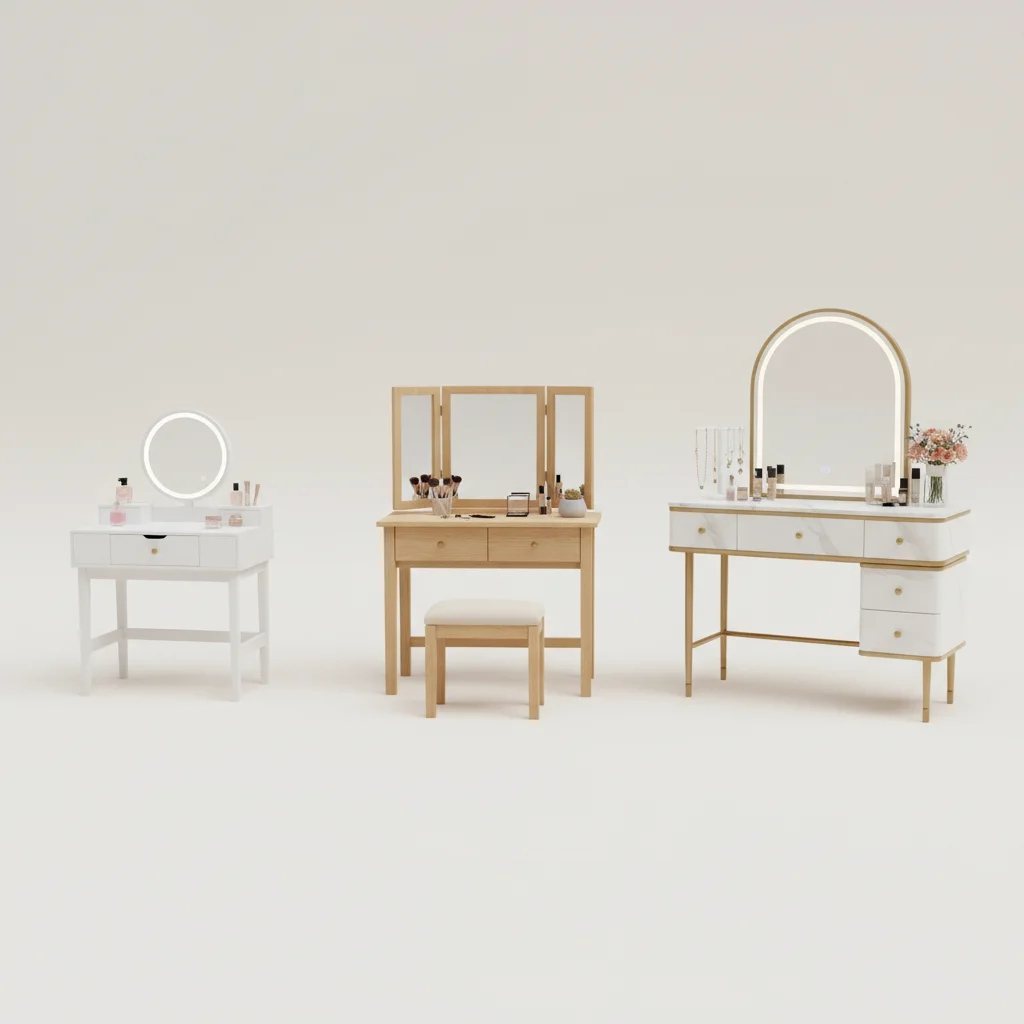
Choosing the correct vanity table size is crucial for both functionality and aesthetics in your room. The ideal dimensions depend on several factors, including available space, intended use, and personal comfort. Generally, a standard vanity table ranges from 30 to 50 inches in width, 16 to 24 inches in depth, and 28 to 32 inches in height. Understanding these common measurements and how they relate to your specific needs will help you make an informed decision.
Assessing Your Available Space
Before selecting a vanity, accurately measure the area where you plan to place it. Consider not only the width and depth but also the height, especially if you have wall-mounted mirrors or shelves above. Ensure there’s enough room for a chair or stool to be pulled out comfortably without obstructing walkways or other furniture. A good rule of thumb is to leave at least 24-30 inches of clear space in front of the vanity for seating and movement.
For smaller rooms or tight corners, compact or corner vanity tables are excellent solutions. These often feature reduced depths or triangular designs to maximize limited square footage. Conversely, larger rooms can accommodate more expansive vanities, potentially with multiple drawers or a wider tabletop for extensive beauty collections.
Considering Intended Use and Storage Needs
The primary purpose of your vanity table heavily influences the size you should choose. If you only need a small surface for quick makeup application, a minimalist design with minimal storage might suffice. However, if you plan to store a vast array of cosmetics, skincare products, and hair tools, a larger vanity with ample drawer space is essential. Many vanities offer a combination of shallow and deep drawers to accommodate various item sizes.
Think about the items you use most frequently and how you want to organize them. Some users prefer open shelving for easy access, while others prioritize enclosed drawers for a clutter-free look. The number of drawers and their internal dimensions can significantly impact the overall usability of the vanity.
Ergonomics and Comfort for Daily Rituals
|
Our Picks for the Best Vanity Table in 2026
As an Amazon Associate I earn from qualifying purchases.
|
||
| Num | Product | Action |
|---|---|---|
| 1 | Large Vanity Desk with 3 Color Touch Screen Dimming Mirror, Vanity Desk with Charging Station, Modern Retractable Makeup Dressing Table, Makeup Table With storage shelves and 5 Sliding Drawers, Black |

|
| 2 | BOLUO Small Vanity Desk with Hollywood Mirror and Lights, Girls Vanity with Stool, Fluted Vanity Set, Compact Make Up Table with Drawers and Outlet Bedroom |
|
| 3 | Large Vanity Desk with 3 Color Touch Screen Dimming Mirror, Vanity Desk with Charging Station, Modern Retractable Makeup Dressing Table, Makeup Table With storage shelves and 5 Sliding Drawers, Walnut |
|
| 4 | 43" Fluted Makeup Vanity Desk with 32" Mirror and Lights, Modern Glass Top Large Vanity Table with 5 Drawers and 3 Storage Shelves, Dressing Table Set with Charging Station for Bedroom-Gray |
|
| 5 | Black,Vanity Desk with Mirror and Lights,Makeup Vanity with Power Outlet and Adjustable Cabinet,Modern Makeup Table with 3 Drawers for Bedroom Makeup Room |
|
| 6 | Kitsure Vanity Desk with Mirror and Lights - Large Capacity Makeup Vanity with 4 Fabric Storage Drawers & 3 Lighting Modes, Vanity Table Set with Sturdy Metal Frame for Bedroom, White, 35" x 17" x 52" |
|
| 7 | SUPERJARE 35.4" White and Gold Desk with 2 Drawers, Modern Makeup Vanity with Padded Stool, Small Computer Desk Home Office Desk for Writing Study Bedroom |
|
| 8 | 47.24" Big Modern Vanity Desk with Mirror and Lights,Makeup Vanity Desk with 5 Drawers and Storage Shelves & Power Outlet,Dressing Table with Glass Top, Oak |
|
| 9 | Vanity Desk with 29.53" HD Lighted Mirror, 47.24" Big Modern Vanity Desk with Mirror and Lights, Makeup Vanity with 5 Drawers and Storage Shelves and Charging Station, Oak2 |
|
| 10 | 57“Makeup Vanity Desk with Mirror and Lights, Vanity Desk with 5 Drawers & Storage Shelves, Vanity Table with Power Outlet, 3 Color Modes & Adjustable Brightness Dressing Table, Bedroom,Oak |
|
Comfort is paramount when spending time at your vanity. The height of the table should allow you to sit comfortably with your feet flat on the floor or a footrest, and your arms at a natural angle for applying makeup or styling hair. The standard height of 28-32 inches is designed to accommodate most adults, but if you are particularly tall or short, you might seek out adjustable options or consider a custom build.
Additionally, ensure there’s enough legroom under the table. A vanity with a crossbar or a very deep drawer unit might restrict leg movement, making prolonged use uncomfortable. Always test the seating arrangement with your chosen chair or stool to confirm it provides adequate comfort and posture support.
Popular Vanity Table Dimensions and Their Benefits
- Compact Vanities (24-30 inches wide): Ideal for small bedrooms, dorms, or as a secondary beauty station. They offer basic functionality without overwhelming the space.
- Standard Vanities (30-45 inches wide): The most common size, providing a good balance of surface area and storage for everyday use. Suitable for most average-sized rooms.
- Large Vanities (45-60+ inches wide): Perfect for those with extensive beauty collections or who desire a luxurious, spacious setup. Often includes multiple drawers and a wide mirror.
- Corner Vanities: Designed to fit snugly into room corners, saving linear wall space. Their unique shape can be a stylish and practical solution for awkward layouts.
When selecting your vanity, remember that the mirror’s size and placement also play a role in the overall aesthetic and functionality. A mirror that is too small for a large vanity can look disproportionate, while an oversized mirror might overpower a compact table.
Material and Style Considerations
While not directly related to size, the material and style of your vanity table can influence its perceived dimensions and how it fits into your room. Lighter colors and reflective surfaces, such as glass or high-gloss finishes, can make a smaller vanity appear larger and brighter. Conversely, dark wood or heavy, ornate designs might make a large vanity feel even more substantial.
Consider the existing decor of your room. A modern, minimalist vanity will blend seamlessly into a contemporary space, while a vintage-inspired piece might be more appropriate for a classic or eclectic setting. The right material and style can enhance the overall harmony of your beauty corner, making it a truly inviting and functional space.

The general measurements were useful, especially the 28-32 inches in height. However, I found it a little light on advice for really tiny spaces. My apartment is super small, and even the smaller end of the ‘standard’ range felt too big. I was hoping for more creative solutions for maximizing space with a compact vanity. It’s a good starting point, though.
This was super helpful for narrowing down my options. I always thought a standard vanity was just one size, but understanding the range of 30 to 50 inches in width made a big difference. I needed something on the wider side for all my makeup, and now I know exactly what to look for. My only wish is that it had a bit more info on specific chair heights to match.
I’m so glad I read this before buying my new vanity! I was about to get one that was way too deep for my small bedroom. The advice about leaving 24-30 inches of clear space in front really helped me visualize how it would fit. Ended up with a perfect 18-inch deep table that doesn’t make my room feel cramped at all. It’s functional and looks great.
Finally, a guide that breaks down vanity table sizes in a way that makes sense! I was so overwhelmed by all the options online. The tip about measuring not just width and depth but also height was a game-changer for me since I have a wall-mounted mirror already. It helped me avoid a huge mistake and pick a table that fits perfectly under it.