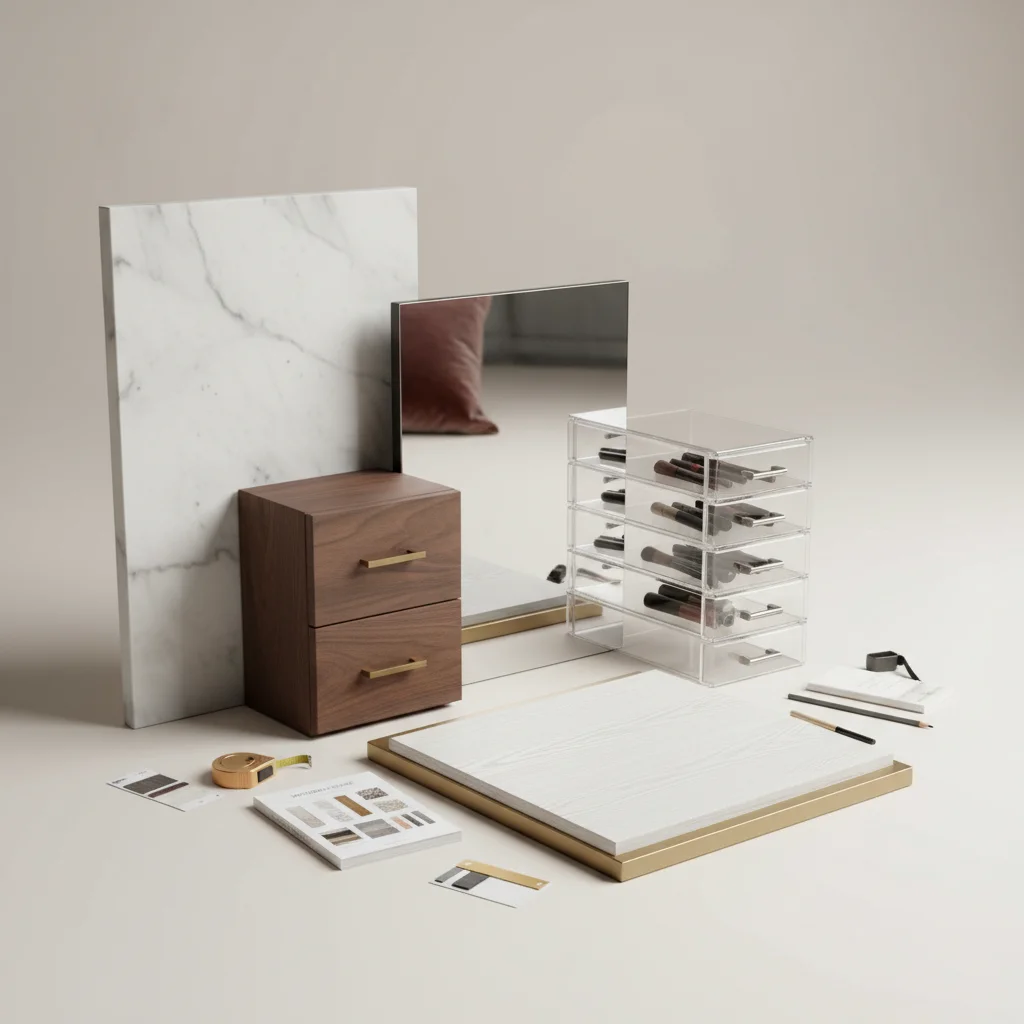
Choosing the right vanity table material is crucial for durability, aesthetics, and maintenance. There are typically five main types of materials used in vanity table construction: solid wood, engineered wood (MDF/particle board), metal, glass, and acrylic. Each offers distinct advantages and disadvantages in terms of cost, longevity, and style, making your selection dependent on your specific needs and preferences.
Solid Wood: Timeless Durability
Solid wood vanity tables, often crafted from oak, maple, or pine, are renowned for their exceptional durability and classic appeal. They can withstand significant wear and tear, and with proper care, can last for decades. The natural grain patterns and rich tones of solid wood add a touch of elegance and warmth to any room. However, solid wood can be more expensive than other materials and requires specific maintenance to prevent warping or cracking due to humidity changes. It’s also heavier, making it less portable.
Engineered Wood: Affordable Versatility
Engineered wood, such as MDF (Medium-Density Fiberboard) or particle board, is a popular choice for vanity tables due to its affordability and versatility. These materials are made from wood fibers or particles bonded together with resin, often finished with a veneer or laminate. They offer a smooth surface that is easy to paint or customize and are less prone to warping than solid wood. While generally less durable than solid wood, higher-quality engineered wood can still provide a sturdy and attractive option for many years.
Metal and Glass: Modern and Sleek
|
Our Picks for the Best Vanity Table in 2026
As an Amazon Associate I earn from qualifying purchases.
|
||
| Num | Product | Action |
|---|---|---|
| 1 | Large Vanity Desk with 3 Color Touch Screen Dimming Mirror, Vanity Desk with Charging Station, Modern Retractable Makeup Dressing Table, Makeup Table With storage shelves and 5 Sliding Drawers, Walnut |

|
| 2 | Black,Vanity Desk with Mirror and Lights,Makeup Vanity with Power Outlet and Adjustable Cabinet,Modern Makeup Table with 3 Drawers for Bedroom Makeup Room |
|
| 3 | 57“Makeup Vanity Desk with Mirror and Lights, Vanity Desk with 5 Drawers & Storage Shelves, Vanity Table with Power Outlet, 3 Color Modes & Adjustable Brightness Dressing Table, Bedroom,Oak |
|
| 4 | 43" Fluted Makeup Vanity Desk with 32" Mirror and Lights, Modern Glass Top Large Vanity Table with 5 Drawers and 3 Storage Shelves, Dressing Table Set with Charging Station for Bedroom-Gray |
|
| 5 | BOLUO Small Vanity Desk with Hollywood Mirror and Lights, Girls Vanity with Stool, Fluted Vanity Set, Compact Make Up Table with Drawers and Outlet Bedroom |
|
| 6 | Vanity Desk with 29.53" HD Lighted Mirror, 47.24" Big Modern Vanity Desk with Mirror and Lights, Makeup Vanity with 5 Drawers and Storage Shelves and Charging Station, Oak2 |
|
| 7 | Kitsure Vanity Desk with Mirror and Lights - Large Capacity Makeup Vanity with 4 Fabric Storage Drawers & 3 Lighting Modes, Vanity Table Set with Sturdy Metal Frame for Bedroom, White, 35" x 17" x 52" |
|
| 8 | SUPERJARE 35.4" White and Gold Desk with 2 Drawers, Modern Makeup Vanity with Padded Stool, Small Computer Desk Home Office Desk for Writing Study Bedroom |
|
| 9 | Large Vanity Desk with 3 Color Touch Screen Dimming Mirror, Vanity Desk with Charging Station, Modern Retractable Makeup Dressing Table, Makeup Table With storage shelves and 5 Sliding Drawers, Black |
|
| 10 | 47.24" Big Modern Vanity Desk with Mirror and Lights,Makeup Vanity Desk with 5 Drawers and Storage Shelves & Power Outlet,Dressing Table with Glass Top, Oak |
|
Metal vanity tables, often featuring wrought iron, steel, or aluminum frames, provide a contemporary and industrial aesthetic. They are incredibly strong and durable, resistant to scratches and dents, and easy to clean. Glass vanity tables, either with a full glass top or glass shelves, offer a light, airy, and sophisticated look, making smaller spaces feel more open. Both metal and glass are excellent choices for modern or minimalist decor. However, glass can be fragile and prone to fingerprints, while metal can sometimes feel cold to the touch.
Acrylic: Lightweight and Contemporary
Acrylic vanity tables are a modern and often translucent option, known for their lightweight nature and sleek appearance. This material is highly versatile, allowing for unique shapes and designs, and can come in various colors. Acrylic is generally durable and resistant to shattering, making it a safer alternative to glass in some contexts. It’s also relatively easy to clean. However, acrylic can be prone to scratching and may not offer the same level of sturdiness as solid wood or metal.
Choosing Your Ideal Material
When deciding on the best vanity table material, consider your budget, desired aesthetic, and how much maintenance you’re willing to undertake. For a long-lasting, traditional piece, solid wood is an excellent investment. If affordability and modern design are priorities, engineered wood or acrylic might be more suitable. For a truly contemporary and robust option, metal and glass combinations stand out. Think about the overall decor of your room and how the material will complement or contrast with existing furniture.
- Consider your budget and long-term investment.
- Evaluate the aesthetic appeal and how it fits your decor.
- Assess the required maintenance and cleaning effort.
- Think about durability and resistance to wear and tear.
- Factor in the weight and portability if you plan to move it.
