A vintage-style vanity table transforms a cozy room into a personal sanctuary, offering a dedicated space for beauty rituals while adding timeless elegance. For snug spaces, selecting the ideal vintage vanity requires careful consideration of size, style, and practical features to ensure it enhances the room without overwhelming it. This guide details various design eras, essential buying factors, and maintenance tips to help you choose a piece that perfectly complements your home.
What is a Vanity Table?
A vanity table, also known as a dressing table, is a dedicated piece of furniture designed for personal grooming and cosmetic application. It serves as a central hub for storing makeup, jewelry, and beauty essentials, making routines more organized and enjoyable. Historically, this elegant furniture evolved from simple storage chests in ancient civilizations to elaborate decorative statements, always providing a personal space for self-care.
The history of the vanity table is rich, tracing back to ancient Egypt and Greece with small, ornate grooming boxes. By the 17th century, these evolved into the French “toilette” or “poudreuse” for perfumes and powders. The 18th and 19th centuries saw dressing tables become prominent, especially during the Victorian era, featuring elaborate carvings and rich woods like mahogany or walnut. The early 20th century introduced Art Deco’s sleek, geometric lines and integrated lighting, followed by Mid-Century Modern’s streamlined aesthetic. Each period left a unique imprint, offering diverse styles cherished today.
Several popular types of vintage vanity tables can infuse distinct character into a cozy room:
- Victorian (1837-1901): These vanities are often ornate and substantial, featuring rich mahogany or walnut, intricate carvings, and prominent oval mirrors. Smaller Victorian pieces can still fit beautifully into a cozy setting.
- Edwardian (1901-1910): Displaying plainer, more angular lines and turned legs, Edwardian vanities often incorporate wing mirrors. Their less embellished nature makes them adaptable to smaller spaces.
- Art Nouveau (1890-1910): Characterized by flowing floral patterns, curved lines, and figural motifs, Art Nouveau vanities bring organic elegance, often with mirrors held by carved wood supports.
- Art Deco (1920s-1940s): Offering bold geometry and sleek sophistication, Art Deco vanities feature streamlined forms, sometimes with striking “waterfall” veneer patterns and integrated electric lighting. Their clean lines are surprisingly space-efficient.
- Mid-Century Modern (1940s-1960s): Embracing simplicity and functionality, these vanities feature clean lines, natural wood like teak or satinwood, and minimalist aesthetics. Their uncluttered design is ideal for maintaining an open feel in cozy rooms.
- Hollywood Regency: Popular from the 1930s to the 1970s, this style combines glamour with drama, often incorporating mirrored surfaces, brass accents, and elegant proportions that make small rooms feel luxurious.
- Shabby Chic: This style embraces a distressed, antique look with painted, worn finishes and delicate details. Its romantic aesthetic can soften a cozy space, making it feel gentle and inviting.
Factors to Consider When Buying a Vanity Table
Choosing the perfect vintage vanity table for a cozy room involves balancing aesthetics and practicality. Key factors guide your decision, ensuring the piece is beautiful and functions seamlessly within limited space.
Size and Space
|
Our Picks for the Best Vanity Table in 2026
As an Amazon Associate I earn from qualifying purchases.
|
||
| Num | Product | Action |
|---|---|---|
| 1 | 43" Fluted Makeup Vanity Desk with 32" Mirror and Lights, Modern Glass Top Large Vanity Table with 5 Drawers and 3 Storage Shelves, Dressing Table Set with Charging Station for Bedroom-Gray |

|
| 2 | Large Vanity Desk with 3 Color Touch Screen Dimming Mirror, Vanity Desk with Charging Station, Modern Retractable Makeup Dressing Table, Makeup Table With storage shelves and 5 Sliding Drawers, Black |
|
| 3 | Black,Vanity Desk with Mirror and Lights,Makeup Vanity with Power Outlet and Adjustable Cabinet,Modern Makeup Table with 3 Drawers for Bedroom Makeup Room |
|
| 4 | BOLUO Small Vanity Desk with Hollywood Mirror and Lights, Girls Vanity with Stool, Fluted Vanity Set, Compact Make Up Table with Drawers and Outlet Bedroom |
|
| 5 | 57“Makeup Vanity Desk with Mirror and Lights, Vanity Desk with 5 Drawers & Storage Shelves, Vanity Table with Power Outlet, 3 Color Modes & Adjustable Brightness Dressing Table, Bedroom,Oak |
|
| 6 | 47.24" Big Modern Vanity Desk with Mirror and Lights,Makeup Vanity Desk with 5 Drawers and Storage Shelves & Power Outlet,Dressing Table with Glass Top, Oak |
|
| 7 | Vanity Desk with 29.53" HD Lighted Mirror, 47.24" Big Modern Vanity Desk with Mirror and Lights, Makeup Vanity with 5 Drawers and Storage Shelves and Charging Station, Oak2 |
|
| 8 | Large Vanity Desk with 3 Color Touch Screen Dimming Mirror, Vanity Desk with Charging Station, Modern Retractable Makeup Dressing Table, Makeup Table With storage shelves and 5 Sliding Drawers, Walnut |
|
| 9 | Kitsure Vanity Desk with Mirror and Lights - Large Capacity Makeup Vanity with 4 Fabric Storage Drawers & 3 Lighting Modes, Vanity Table Set with Sturdy Metal Frame for Bedroom, White, 35" x 17" x 52" |
|
| 10 | SUPERJARE 35.4" White and Gold Desk with 2 Drawers, Modern Makeup Vanity with Padded Stool, Small Computer Desk Home Office Desk for Writing Study Bedroom |
|
For cozy rooms, size is paramount. Accurately measure your available space, considering the vanity’s width and depth, clearance for drawers, mirror swing (especially tri-fold types), and room for a stool. Compact options like corner units or narrow console styles are ideal. Flip-top vanities, which conceal a mirror and storage when closed, are excellent for dual-purpose rooms, offering a flat surface when not in use. Always factor in the height of both the table and stool for comfortable seating and proper mirror alignment.
Materials
The material of a vintage vanity table significantly contributes to its aesthetic, durability, and feel.
- Wood: This is the most common material for vintage vanities.
- Solid Wood (Mahogany, Walnut, Oak, Maple): Offers exceptional durability, a rich, authentic look, and beautiful grain patterns. Victorian and Edwardian pieces often feature deep-toned mahogany or warm walnut. Black walnut is prized for its wear resistance and classic appearance.
- Engineered Wood (MDF, MFC): More common in modern reproductions, these offer stability and cost-effectiveness. They are generally lighter and provide consistent finishes.
- Metal: Used primarily for decorative elements like brass or gold accents, hardware, or elegant legs. Hollywood Regency styles often combine metal with glass for a glamorous effect.
- Glass: Essential for mirrors, glass is also used for tabletops or shelves, adding lightness and reflecting light to make small spaces feel larger.
- Marble: Found on higher-end antique pieces, especially French Louis XVI or Renaissance styles, marble tabletops provide a luxurious, durable, and cool surface.
- Rattan/Bamboo: More casual vintage styles, particularly bohemian or tropical aesthetics, may feature rattan or bamboo construction, offering a lighter, textured look.
Design Style
The specific vintage design style you choose dictates the ambiance of your cozy room. Consider if you prefer the intricate elegance of a Victorian piece, the sleek modernity of Art Deco, or the minimalist charm of Mid-Century Modern. Perhaps the romantic allure of a Shabby Chic vanity or the luxurious shimmer of Hollywood Regency resonates more. Ensure the lines, ornamentation, and overall feel of the vanity integrate with your existing decor for a harmonious and truly “cozy” environment.
Budget
Vintage vanity tables span a wide price range, from a few hundred to over a thousand dollars for typical antique examples, with rare pieces costing significantly more. Determine your maximum budget upfront. Factors like material quality, rarity, condition, and the designer or era influence cost. A vintage piece is an investment, often offering superior craftsmanship and character compared to mass-produced modern alternatives. Balancing affordability with desired quality and aesthetic helps you find a joyful piece without overspending.
Comparing Popular Vintage Vanity Table Styles
Choosing among diverse vintage vanity styles can be daunting for a cozy room. The following table provides a detailed comparison, highlighting key features, typical materials, and suitability for smaller spaces.
| Feature | Victorian (1837-1901) | Art Deco (1920s-1940s) | Mid-Century Modern (1940s-1960s) | Hollywood Regency (1930s-1970s) | Shabby Chic (Modern interpretation) |
|---|---|---|---|---|---|
| Aesthetic | Ornate, elegant, sometimes imposing, romantic, intricate. | Sleek, geometric, glamorous, modern, sophisticated. | Minimalist, functional, organic, clean lines. | Luxurious, bold, reflective, often mirrored or metallic. | Rustic, romantic, distressed, soft, feminine. |
| Key Materials | Mahogany, walnut, oak, brass hardware, marble tops. | Exotic veneers, chrome, glass, mirrors, lacquer. | Teak, walnut, birch, glass, sometimes laminate. | Mirrored glass, brass, chrome, lacquer, rich upholstery. | Distressed wood, painted finishes (white/pastel), wrought iron. |
| Typical Features | Heavy carvings, turned legs, oval/tri-fold mirrors, velvet lining, numerous drawers. | Waterfall edges, integrated lighting, geometric patterns, bold hardware, clean surfaces. | Tapered legs, simple drawers, often modular, seamless surfaces, functional mirrors. | Mirrored panels, brass/chrome accents, tufted stools, often compact, elegant hardware. | Chipped paint, soft curves, antique hardware, floral motifs, often white or pastel. |
| Cozy Room Suitability | Select smaller pieces or delicate designs. Can be a strong focal point. | Excellent, clean lines don’t clutter visually; often compact. | Excellent, minimalist design promotes openness; highly functional. | Good, can add luxury without bulk; reflective surfaces expand space. | Good, softer aesthetic can make a room feel gentle and inviting. |
| Price Range (Antique) | Moderate to High | Moderate to High | Moderate | Moderate to High | Low to Moderate (depends on base piece) |
| Pros for Cozy Rooms | Timeless elegance; adds character. | Visual lightness; streamlined functionality. | Space-saving, highly functional; modern appeal. | Creates an illusion of space; high glam factor. | Softens the room; charming, inviting feel. |
| Cons for Cozy Rooms | Can be visually heavy; large footprints. | Can sometimes feel too formal or cold. | Less ornate if you prefer intricate details. | Can be fragile (mirrored surfaces); very specific style. | May appear overly “shabby” if not chosen carefully. |
> “A well-chosen vintage vanity table not only serves a practical purpose but also tells a story, infusing your personal space with character and a sense of timeless beauty.” – Mia Jones, Interior Design Expert
Buying Guide for Vintage Vanity Tables
Acquiring a vintage vanity table is an exciting endeavor that blends the thrill of the hunt with the joy of finding a unique piece. Knowing where to look and what to inspect can make all the difference in securing a treasured addition to your cozy room.
Reputable Sources for Vintage Vanity Tables
When searching for the perfect vintage vanity, consider both online and local avenues:
- Online Marketplaces:
- Etsy: Excellent for unique, handmade, or curated vintage pieces, often from individual sellers specializing in specific aesthetics.
- eBay:: A vast marketplace for both antique dealers and private sellers, offering a wide range of styles and price points. Be diligent with seller ratings and item descriptions.
- Vinterior & Pamono: These platforms specialize in high-quality vintage and antique furniture, particularly from European dealers, offering a curated selection and often detailed provenance.
- Wayfair & Walmart: While primarily modern retailers, they often carry “vintage-style” reproductions that capture the aesthetic without the age, which can be a good option for specific budget or condition needs.
- Local Antique Shops & Flea Markets: These offer the advantage of seeing the piece in person, allowing for thorough inspection. You might also find unique local treasures and negotiate prices.
- Estate Sales: Often yield authentic vintage furniture at competitive prices, as items need to be sold quickly.
- Specialty Furniture Stores: Some stores focus on reclaimed, refurbished, or reproduction vintage furniture, providing quality pieces with a vintage flair.
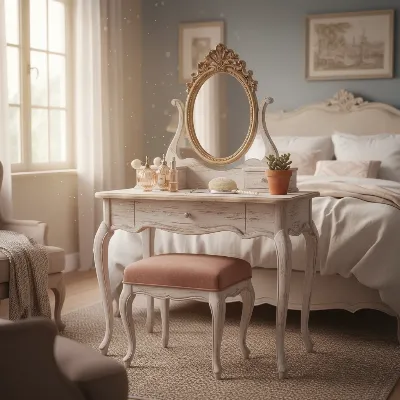 A charming vintage vanity table in a cozy, sunlit bedroom with soft lighting, adorned with antique-style perfume bottles and a delicate mirror.
Inspecting Your Vintage Vanity Table Before Purchase
Before making a commitment, a thorough inspection is crucial, especially for older pieces:
- Check Materials and Craftsmanship: For wooden vanities, examine the wood for any signs of cracking, excessive warping, or deep scratches beyond charming patina. Look for quality craftsmanship, such as hand-cut dovetail joints on drawers, indicating a well-made antique piece.
- Stability and Structure: Gently test the table for wobbles or instability. Ensure all legs are firmly attached and the frame is sturdy. A vintage piece should feel solid, not flimsy.
- Drawers and Hinges: Open and close all drawers to ensure they slide smoothly and quietly. Check hinges on any doors or flip-tops; they should be secure and operate without sticking.
- Mirror Condition: Inspect the mirror carefully for cracks, significant silvering loss, or deep scratches that might impair functionality or aesthetic. Minor imperfections are often part of a vintage piece’s charm. If it’s a tri-fold mirror, ensure side panels adjust easily and hold position.
- Overall Finish: Assess the finish for excessive wear, water damage, or areas needing significant restoration. While some distress is desirable, structural damage or irreparable cosmetic flaws should be noted. Ensure the table is level and free from major structural defects.
Tips for Using and Maintaining Your Vintage Vanity Table
Once you’ve found the perfect vintage vanity table for your cozy room, proper care and thoughtful arrangement ensure its longevity and continued beauty. These simple tips help keep your cherished piece looking its best and functioning as an inviting personal space.
Regular cleaning is fundamental. For wooden vanities, dust frequently with a soft, dry cloth. For thorough cleaning, use a wood-specific cleaner designed for antique or delicate finishes, avoiding harsh chemicals that strip patina. If your vanity has mirrored surfaces or glass tops, use a streak-free glass cleaner and a microfiber cloth for a sparkling finish.
To keep your vanity organized and clutter-free, especially in a cozy room, utilize storage solutions. Arrange cosmetics, brushes, and accessories in decorative trays, small boxes, or drawer organizers. This keeps the surface tidy and protects the wood from spills and scratches. Consider adding small, elegant containers for cotton swabs or jewelry to enhance the vintage aesthetic while maintaining order.
Protecting your vanity from environmental factors is key to its preservation. Position the table away from direct sunlight, which can fade finishes and dry out wood, leading to cracks. Similarly, avoid placing it near heat sources like radiators or vents, as fluctuating temperatures and humidity can cause warping. In excessively dry climates, a small humidifier can help maintain consistent moisture levels. Use coasters under any liquid containers to prevent water rings and wipe up spills immediately.
Finally, address any minor damages promptly. Loose hinges, wobbly legs, or minor scratches can often be fixed with basic furniture repair kits or wood glue. For more significant damage, consult a professional furniture restorer specializing in vintage pieces. Timely attention to small issues prevents them from escalating and helps preserve your vanity’s structural integrity and aesthetic appeal for many more years.
Conclusion
Embracing a vintage style vanity table is more than just adding furniture; it’s about infusing your cozy room with character, history, and a touch of personal luxury. By carefully considering the piece’s size and materials, understanding the nuances of different design eras—from the ornate elegance of Victorian to the sleek lines of Art Deco—and knowing how to inspect and maintain your selection, you can find a vanity that perfectly complements your space. This dedicated corner for self-care will not only enhance your daily routine but also serve as a beautiful focal point, inviting tranquility and timeless charm into your home. Which vintage style speaks most to your heart, and how will it transform your personal sanctuary?
Frequently Asked Questions
What are the best vintage vanity styles for very small bedrooms?
For very small bedrooms, Art Deco, Mid-Century Modern, or compact Shabby Chic vanities are excellent choices. Their streamlined designs, functional layouts, and often smaller footprints minimize visual clutter while providing essential utility. Flip-top vanities that can serve as a desk when closed also maximize versatility in limited spaces.
How can I make a vintage vanity table fit into a modern decor style?
Integrate a vintage vanity into modern decor by choosing a piece with cleaner lines, such as Art Deco or Mid-Century Modern. Pair it with contemporary accessories, a minimalist mirror, or a modern stool to create an eclectic yet cohesive look. A neutral-colored vintage vanity can also blend seamlessly with modern elements.
What materials are most durable for a vintage vanity table?
Solid wood, such as mahogany, walnut, or oak, is generally the most durable material for vintage vanity tables, offering robust construction and longevity. Marble tops also provide exceptional durability and resistance to heat and moisture, though they can be heavy.
Are vintage vanity tables difficult to maintain?
Vintage vanity tables are not inherently difficult to maintain, but they do benefit from regular care. This includes dusting with a soft cloth, using appropriate wood cleaners, protecting surfaces from direct sunlight and moisture, and promptly addressing any minor repairs to preserve their condition.
Can a vintage vanity table be used as a desk?
Many vintage vanity tables, especially those with a flat top and sufficient clearance underneath, can effectively double as a small desk. Flip-top vanities are particularly well-suited for this, offering a clear work surface when the mirror is closed. Consider the height and drawer space for desk functionality.
What should I look for to ensure an antique vanity table is authentic?
To ensure authenticity, look for signs of hand craftsmanship like dovetail joints, original hardware (or clear indications of replacements), and natural wear patterns consistent with age. Research the specific period style for typical materials, construction methods, and design elements to verify its historical accuracy.
How do I choose the right mirror for a vintage vanity without one?
If your vintage vanity lacks a mirror, consider a style that complements the table’s era. An ornate gold mirror for Victorian, a sleek geometric one for Art Deco, or a simple round mirror for Mid-Century Modern would be appropriate. Ensure the mirror’s scale is proportionate to the table and your space.
Frequently Asked Questions
What are the best vintage vanity styles for very small bedrooms?
For very small bedrooms, Art Deco, Mid-Century Modern, or compact Shabby Chic vanities are excellent choices. Their streamlined designs and functional layouts minimize visual clutter while providing essential utility. Flip-top vanities also maximize versatility in limited spaces by offering a desk surface when closed.
How can I make a vintage vanity table fit into a modern decor style?
Integrate a vintage vanity into modern decor by choosing a piece with cleaner lines, such as Art Deco or Mid-Century Modern. Pair it with contemporary accessories, a minimalist mirror, or a modern stool to create an eclectic yet cohesive look. A neutral-colored vintage vanity can also blend seamlessly with modern elements.
What materials are most durable for a vintage vanity table?
Solid wood, such as mahogany, walnut, or oak, is generally the most durable material for vintage vanity tables, offering robust construction and longevity. Marble tops also provide exceptional durability and resistance to heat and moisture, though they can be heavy and require careful handling.
Are vintage vanity tables difficult to maintain?
Vintage vanity tables are not inherently difficult to maintain, but they do benefit from regular care. This includes dusting with a soft cloth, using appropriate wood cleaners, protecting surfaces from direct sunlight and moisture, and promptly addressing any minor repairs to preserve their condition for many years.
Can a vintage vanity table be used as a desk?
Many vintage vanity tables, especially those with a flat top and sufficient clearance underneath, can effectively double as a small desk. Flip-top vanities are particularly well-suited for this, offering a clear work surface when the mirror is closed. Consider the height and drawer space for optimal desk functionality.
What should I look for to ensure an antique vanity table is authentic?
To ensure authenticity, look for signs of hand craftsmanship like dovetail joints, original hardware (or clear indications of replacements), and natural wear patterns consistent with age. Research the specific period style for typical materials, construction methods, and design elements to verify its historical accuracy and avoid reproductions.

The information on maintenance tips was useful, but I wish there had been more specific brand recommendations for where to buy these vintage pieces. It felt a little vague on that front. I did find a nice piece eventually, but it took a lot more searching than I anticipated. Still, it’s a good starting point for anyone new to vintage furniture.
I’ve been looking for a vintage vanity for ages to fit my small bedroom, and this guide was a lifesaver! The tips on considering size and style for snug spaces really helped me narrow down my options. I ended up finding a beautiful Art Deco piece that fits perfectly without making the room feel cramped. It’s truly transformed my morning routine.
This was exactly what I needed! I loved the emphasis on how a vanity table can create a personal sanctuary. I’ve always wanted a dedicated space for my beauty rituals, and the idea of a vintage piece adding timeless elegance really resonated with me. My new vanity is not just functional, it’s a beautiful focal point in my room.
I appreciated the breakdown of different design eras. I was leaning towards a Victorian style but after reading about the practical features, I realized a more streamlined Mid-Century Modern vanity would suit my needs better. It’s great to have a dedicated spot for all my beauty essentials now. The storage is surprisingly good for its compact size.