Few things are more frustrating than a wobbly vanity table disrupting your morning routine or evening wind-down. That annoying tremor, the precarious balance of your favorite perfume bottles, or the subtle rocking that reminds you something isn’t quite right. A stable vanity table is essential for both functionality and peace of mind in your beauty space. But before you consider replacing it, know that many common wobbles can be quickly and effectively fixed right at home with a few simple tools and a bit of DIY spirit. This comprehensive guide will help you diagnose the root cause of the instability and walk you through various solutions, transforming your shaky vanity into a steadfast centerpiece once more.
What is a Vanity Table?
A vanity table, often referred to as a dressing table, is a piece of furniture typically found in bedrooms or dressing areas, primarily designed for personal grooming. It usually features a flat surface for cosmetics and accessories, often accompanied by a mirror and storage drawers or compartments. From applying makeup to styling hair, these tables serve as dedicated spaces for self-care. Throughout history, vanity tables have evolved from elaborate, ornate pieces signifying status to the diverse, functional designs we see today, catering to various aesthetic preferences and spatial needs. Common types range from compact corner vanities to expansive models with integrated lighting, but their core purpose remains consistent: to provide a convenient and organized beauty station.
Factors to Consider When Buying a Vanity Table
While this guide focuses on fixing existing wobbles, understanding key factors when purchasing a vanity table can help prevent future issues. Prioritizing stability from the start is always a smart move.
Size and Space
|
Our Picks for the Best Vanity Table in 2026
As an Amazon Associate I earn from qualifying purchases.
|
||
| Num | Product | Action |
|---|---|---|
| 1 | Large Vanity Desk with 3 Color Touch Screen Dimming Mirror, Vanity Desk with Charging Station, Modern Retractable Makeup Dressing Table, Makeup Table With storage shelves and 5 Sliding Drawers, Black |

|
| 2 | Black,Vanity Desk with Mirror and Lights,Makeup Vanity with Power Outlet and Adjustable Cabinet,Modern Makeup Table with 3 Drawers for Bedroom Makeup Room |
|
| 3 | Vanity Desk with 29.53" HD Lighted Mirror, 47.24" Big Modern Vanity Desk with Mirror and Lights, Makeup Vanity with 5 Drawers and Storage Shelves and Charging Station, Oak2 |
|
| 4 | BOLUO Small Vanity Desk with Hollywood Mirror and Lights, Girls Vanity with Stool, Fluted Vanity Set, Compact Make Up Table with Drawers and Outlet Bedroom |
|
| 5 | 43" Fluted Makeup Vanity Desk with 32" Mirror and Lights, Modern Glass Top Large Vanity Table with 5 Drawers and 3 Storage Shelves, Dressing Table Set with Charging Station for Bedroom-Gray |
|
| 6 | SUPERJARE 35.4" White and Gold Desk with 2 Drawers, Modern Makeup Vanity with Padded Stool, Small Computer Desk Home Office Desk for Writing Study Bedroom |
|
| 7 | Kitsure Vanity Desk with Mirror and Lights - Large Capacity Makeup Vanity with 4 Fabric Storage Drawers & 3 Lighting Modes, Vanity Table Set with Sturdy Metal Frame for Bedroom, White, 35" x 17" x 52" |
|
| 8 | 57“Makeup Vanity Desk with Mirror and Lights, Vanity Desk with 5 Drawers & Storage Shelves, Vanity Table with Power Outlet, 3 Color Modes & Adjustable Brightness Dressing Table, Bedroom,Oak |
|
| 9 | Large Vanity Desk with 3 Color Touch Screen Dimming Mirror, Vanity Desk with Charging Station, Modern Retractable Makeup Dressing Table, Makeup Table With storage shelves and 5 Sliding Drawers, Walnut |
|
| 10 | 47.24" Big Modern Vanity Desk with Mirror and Lights,Makeup Vanity Desk with 5 Drawers and Storage Shelves & Power Outlet,Dressing Table with Glass Top, Oak |
|
Before falling in love with a design, meticulously measure your available space. Consider not only the width and depth of the table but also its height in relation to your chosen stool or chair. An ill-fitting vanity can lead to discomfort and may contribute to perceived instability if it’s constantly being nudged or awkwardly used. Ensure there’s ample room for you to sit comfortably and for drawers to open fully without obstruction.
Chất Liệu
The material of your vanity table significantly impacts its durability and, by extension, its long-term stability.
- Solid Wood: Often the most durable, solid wood offers excellent stability and longevity but typically comes with a higher price tag. It’s less prone to structural failure when properly constructed.
- Engineered Wood (MDF, Particle Board): More affordable and versatile, engineered wood is common in many modern vanity tables. While stable, it can be more susceptible to hardware loosening over time or damage from moisture if not well-maintained.
- Metal, Glass, Plastic: These materials offer diverse aesthetics. Metal frames can be very sturdy, while glass tops require careful handling. Plastic is lightweight and often more utilitarian. The joints and how these materials are fastened together are crucial for stability.
Phong Cách Thiết Kế
The aesthetic appeal is undoubtedly important, but also consider how the design influences structural integrity. A minimalist design with fewer joints might be inherently more stable than an overly elaborate one with many weak points, unless the latter is exceptionally well-constructed. From classic French Provincial to sleek contemporary or charming vintage, ensure the style chosen also offers practical stability.
Ngân Sách
Establishing a budget helps narrow down options, but remember that investing a little more upfront in a well-built vanity can save you the hassle and cost of repairs later. While budget-friendly options exist, carefully inspect their construction for signs of potential instability, such as flimsy joinery or thin materials. Balance cost with quality and expected lifespan.
How to Fix a Wobbly Vanity Table
When your vanity table starts to wobble, identifying the exact cause is the first and most critical step. Many issues can be resolved with simple DIY methods.
Diagnosing the Wobble
Before you grab any tools, play detective. Gently rock the vanity table and observe where the movement originates.
- Loose Screws or Fasteners: This is the most common culprit. Over time, bolts, screws, and brackets can loosen due to regular use or movement, leading to instability. Check underneath the tabletop and where legs attach.
- Uneven Legs: One or more legs might be slightly shorter than the others, causing the table to rock on a level surface. This can be due to manufacturing imperfections, wear and tear, or slight warping of the wood.
- Uneven Floor: Sometimes, the table itself is perfectly stable, but your floor isn’t. Move the vanity to a different, known level spot to confirm if the wobble persists.
- Damaged Joints or Structural Issues: Cracks, splits in the wood, or worn-out dowels within the joints can weaken the table’s structure. This is a more serious issue but often still fixable.
- Worn-Out or Missing Feet/Pads: Small plastic or felt pads on the bottom of legs can wear down or fall off, creating an uneven surface contact.
Essential Tools and Materials
Having the right supplies on hand makes the repair process smoother and more effective.
- Screwdriver Set: Phillips and flathead, often a multi-bit driver is handy.
- Adjustable Wrench or Socket Set: For tightening bolts and nuts.
- Level: To check the evenness of the table and floor.
- Shims: Small, thin pieces of cardboard, cork, felt, or plastic wedges.
- Wood Glue: For reinforcing loose joints or screw holes.
- L-Brackets: Small metal brackets for reinforcing corner joints.
- Adjustable Furniture Glides/Levelers: Threaded feet that screw into the bottom of legs.
- Drill/Driver and Drill Bits: For pre-drilling holes for new hardware or installing levelers.
- Sandpaper or Wood Scraper: For minor leg leveling (more advanced).
- Safety Glasses and Gloves: Always protect yourself when working with tools.
Step-by-Step DIY Fixes
Once you’ve identified the problem, you can apply the appropriate solution.
1. Tighten Loose Hardware
This is often the quickest fix and should always be your first step.
- Locate all Fasteners: Carefully flip the vanity table upside down on a soft, protected surface (like a blanket on the floor) to access the underside.
- Inspect and Tighten: Examine all visible screws, bolts, and corner brackets connecting the legs to the tabletop or apron. Use the appropriate screwdriver or wrench to tighten each one firmly. Be careful not to over-tighten, which can strip screws or damage the wood.
- Reinforce Stripped Holes: If a screw spins endlessly, the hole is stripped. Remove the screw, fill the hole with wood glue, insert a few wooden toothpicks or a small dowel with glue, let it dry, then re-insert the screw. The glue and wood filler will provide new material for the screw threads to grip.
2. Address Uneven Legs or Floor
If tightening hardware doesn’t resolve the wobble, the issue might be an uneven leg or floor.
-
Identify the Short Leg: Place the vanity on a flat surface (if possible) and use a level on the tabletop to find which leg is not touching the ground or is shortest. Alternatively, gently rock the table and note which corner lifts. The problem leg is usually diagonal to the one lifting.
-
Use Shims: For a quick, temporary fix, slide a stiff piece of cardboard, a folded paper towel, a cork coaster, or a furniture shim under the shortest leg until the table is stable. For a more permanent solution, you can hot glue a cork disc to the bottom of the short leg.
-
Install Adjustable Furniture Glides/Levelers: These threaded feet can be screwed into the bottom of each leg, allowing you to make micro-adjustments by twisting them in or out. This is an excellent solution for uneven floors and provides continuous adaptability. You might need to pre-drill pilot holes for installation.
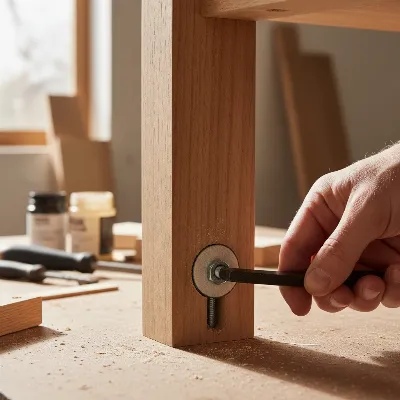 Adjustable furniture levelers being installed on a wooden table leg for stabilization
 -
Trim Longer Legs (Advanced): If one leg is significantly longer, and you’re comfortable with woodworking, you can carefully measure and trim the longer legs to match the shortest one. This requires precision tools like a saw and sandpaper, and it’s best done by flipping the table upside down on a perfectly flat surface.
3. Reinforce Joints and Structure
For more persistent wobbles or visible damage, joint reinforcement is necessary.
- Wood Glue for Loose Joints: If you see gaps where legs meet the apron or tabletop, apply wood glue into the gaps. Clamp the joints tightly overnight if possible, or apply pressure until the glue dries completely. This creates a strong, lasting bond.
- Add L-Brackets: For added strength, especially at the corners where legs meet the table frame, install L-shaped metal brackets. These can be screwed into both the leg and the apron for robust reinforcement.
- Repair Worn Dowels: If your vanity uses dowels (small cylindrical rods) in its joints and they appear loose or worn, you can remove them, clean the holes, apply wood glue, and re-insert new or existing dowels. Clamp until dry.
> “The secret to a truly stable furniture piece often lies in the integrity of its joints. Don’t underestimate the power of a well-glued and reinforced connection.” – John Doe, Master Carpenter
When to Call a Professional
While many wobbly vanity tables can be fixed at home, there are times when professional help is advisable.
- Irreparable Damage: If the table legs are severely cracked, split beyond simple repair, or the main structural components are compromised, a professional carpenter can assess if it’s salvageable and perform complex repairs.
- Persistent Wobbling: If you’ve tried all the DIY methods—tightening hardware, leveling legs, reinforcing joints—and the wobble still persists, there might be a less obvious underlying structural issue that requires expert diagnosis and specialized tools.
- Antique or Valuable Furniture: For sentimental or high-value antique vanity tables, it’s often best to consult a furniture restoration specialist. They have the expertise to preserve the piece’s integrity and value.
Tips for Using and Maintaining Your Vanity Table
Prevention and proper care can significantly extend the life and stability of your vanity table.
- Regular Maintenance Checks: Periodically inspect your vanity table for any loose screws, bolts, or signs of wear. Tightening fasteners every few months can prevent minor issues from becoming major wobbles.
- Protect from Environmental Factors: Avoid placing your vanity table in direct sunlight or areas with extreme temperature fluctuations or high humidity. These conditions can cause wood to warp, leading to instability over time.
- Ensure a Level Surface: Always place your vanity on as level a surface as possible. If your floor is uneven, use permanent leveling solutions like adjustable glides rather than temporary shims.
- Distribute Weight Evenly: Avoid placing all heavy items on one side of the vanity. Distribute the weight of your cosmetics and accessories evenly across the tabletop and within drawers to reduce stress on the frame and joints.
- Handle with Care: When moving your vanity table, always lift it, rather than dragging it. Dragging can put immense strain on the legs and joints, loosening them or causing structural damage.
Conclusion
A wobbly vanity table doesn’t have to be a permanent fixture in your home. By systematically diagnosing the cause and applying the right DIY fix, you can restore its stability and enjoy a seamless beauty routine once again. Whether it’s a simple turn of a screwdriver, the strategic placement of a shim, or a more involved joint reinforcement with wood glue or L-brackets, empowering yourself with these home repair skills saves money and gives new life to your cherished furniture. Don’t let a minor tremor overshadow the elegance and utility of your vanity table—take action and enjoy a rock-solid, beautiful space. What quick fix will you try first to stabilize your vanity table?
 Woman applying makeup at a stable vanity table with organized products
Frequently Asked Questions
Why does my new vanity table wobble even on a flat floor?
A new Vanity Table might wobble due to slightly uneven legs from manufacturing variations, or loose hardware that wasn’t fully tightened during assembly. Even a small difference of an eighth of an inch in leg length can cause significant instability. Always check and tighten all fasteners and verify leg lengths on a known level surface.
Can I use super glue to fix loose vanity table joints?
While super glue can offer a quick bond, it is generally not recommended for structural furniture repairs. Wood glue is specifically designed for wood, creating a stronger, more flexible, and longer-lasting bond that can withstand the stress on furniture joints much better than brittle super glue.