A white wood vanity table can be the focal point of any beauty space, radiating elegance and brightness. However, maintaining its pristine appearance requires careful attention, as white surfaces are notoriously prone to showing every smudge, spill, and speck of dust. If you’ve ever fretted over a stubborn makeup stain or worried about damaging that delicate finish, you’re not alone. This comprehensive guide will equip you with the knowledge and proven techniques to keep your white wood vanity table looking flawless, ensuring its beauty endures for years to come.
What is a Vanity Table?
A vanity table, often simply called a vanity, is a dedicated piece of furniture primarily used for personal grooming, makeup application, and hair styling. It typically features a tabletop surface, often with integrated drawers or compartments for storage, and is usually accompanied by a mirror and a matching stool or chair. The core purpose of a vanity table is to create an organized and comfortable space where one can prepare for the day or evening.
Historically, vanity tables have been symbols of luxury and femininity, evolving from simple dressing tables in ancient civilizations to elaborate, ornate pieces in European aristocracy. During the Rococo and Victorian eras, vanities became intricate showcases of craftsmanship, adorned with delicate carvings and rich finishes. In the 20th century, designs shifted towards more functional and streamlined styles, adapting to modern homes. Today, vanity tables come in a myriad of forms, from classic ornate designs to sleek, minimalist contemporary pieces, often crafted from various materials including wood, metal, glass, and even acrylic, catering to diverse aesthetic preferences and practical needs.
Factors to Consider When Buying a Vanity Table
Choosing the perfect vanity table involves balancing aesthetics with practicality. A well-chosen vanity enhances your daily routine and complements your room’s decor, making careful consideration essential before making a purchase.
Size and Space
|
Our Picks for the Best Vanity Table in 2026
As an Amazon Associate I earn from qualifying purchases.
|
||
| Num | Product | Action |
|---|---|---|
| 1 | Black,Vanity Desk with Mirror and Lights,Makeup Vanity with Power Outlet and Adjustable Cabinet,Modern Makeup Table with 3 Drawers for Bedroom Makeup Room |

|
| 2 | Large Vanity Desk with 3 Color Touch Screen Dimming Mirror, Vanity Desk with Charging Station, Modern Retractable Makeup Dressing Table, Makeup Table With storage shelves and 5 Sliding Drawers, Walnut |
|
| 3 | 57“Makeup Vanity Desk with Mirror and Lights, Vanity Desk with 5 Drawers & Storage Shelves, Vanity Table with Power Outlet, 3 Color Modes & Adjustable Brightness Dressing Table, Bedroom,Oak |
|
| 4 | BOLUO Small Vanity Desk with Hollywood Mirror and Lights, Girls Vanity with Stool, Fluted Vanity Set, Compact Make Up Table with Drawers and Outlet Bedroom |
|
| 5 | 47.24" Big Modern Vanity Desk with Mirror and Lights,Makeup Vanity Desk with 5 Drawers and Storage Shelves & Power Outlet,Dressing Table with Glass Top, Oak |
|
| 6 | Kitsure Vanity Desk with Mirror and Lights - Large Capacity Makeup Vanity with 4 Fabric Storage Drawers & 3 Lighting Modes, Vanity Table Set with Sturdy Metal Frame for Bedroom, White, 35" x 17" x 52" |
|
| 7 | Large Vanity Desk with 3 Color Touch Screen Dimming Mirror, Vanity Desk with Charging Station, Modern Retractable Makeup Dressing Table, Makeup Table With storage shelves and 5 Sliding Drawers, Black |
|
| 8 | SUPERJARE 35.4" White and Gold Desk with 2 Drawers, Modern Makeup Vanity with Padded Stool, Small Computer Desk Home Office Desk for Writing Study Bedroom |
|
| 9 | 43" Fluted Makeup Vanity Desk with 32" Mirror and Lights, Modern Glass Top Large Vanity Table with 5 Drawers and 3 Storage Shelves, Dressing Table Set with Charging Station for Bedroom-Gray |
|
| 10 | Vanity Desk with 29.53" HD Lighted Mirror, 47.24" Big Modern Vanity Desk with Mirror and Lights, Makeup Vanity with 5 Drawers and Storage Shelves and Charging Station, Oak2 |
|
Before falling in love with a particular design, meticulously measure the available space in your bedroom or dressing area. Consider not just the width and depth of the table itself, but also the clearance needed for opening drawers, maneuvering the chair, and ensuring comfortable movement around it. A large, ornate vanity might overwhelm a small room, while a compact corner unit could be lost in a spacious master suite. Pay attention to the height of the table and, crucially, the accompanying chair or stool, ensuring it allows you to sit comfortably with your knees fitting underneath and your mirror at an optimal viewing angle.
Material
The material of your vanity table significantly impacts its durability, appearance, and maintenance requirements.
- Natural Wood: Offers timeless beauty, strength, and can be refinished. Popular choices include oak, maple, and cherry. Pros: Durable, unique grain patterns, long-lasting. Cons: Can be more expensive, susceptible to scratches and water damage if not properly sealed, requires specific care.
- Engineered Wood: Materials like MDF (Medium-Density Fiberboard) and MFC (Melamine Faced Chipboard) are common, often with veneers or laminates. Pros: More affordable, consistent finish, resistant to warping, easy to clean (especially laminated surfaces). Cons: Not as durable as solid wood, can be damaged by excessive moisture, difficult to repair if chipped or scratched deeply.
- Metal, Glass, and Plastic: These materials offer modern and avant-garde design options. Pros: Metal frames provide sturdiness and an industrial look; glass tops offer a sleek, reflective surface; plastics can be lightweight and come in various colors. Cons: Metal can rust; glass shows fingerprints and can chip or shatter; plastic may lack the luxurious feel of wood and can scratch easily.
Design Style
The style of your vanity table should harmonize with your existing decor to create a cohesive look.
- Classic and Neoclassical: Characterized by ornate details, curved legs, intricate carvings, and often a rich, antique finish. These styles exude timeless elegance and pair well with traditional or luxurious interiors.
- Modern and Minimalist: Defined by clean lines, geometric shapes, smooth surfaces, and a lack of embellishment. Often made from sleek materials, these vanities are perfect for contemporary spaces seeking functionality and understated sophistication.
- Vintage and Retro: Drawing inspiration from past decades, these styles might feature unique shapes, specific color palettes, or mid-century modern influences. They add character and a touch of nostalgia, making a bold statement in eclectic or themed rooms.
Budget
Establishing a clear budget is crucial to narrow down your options effectively. Vanity tables range widely in price, from budget-friendly engineered wood options to high-end solid wood or custom-made pieces. Factor in the cost of the table itself, any accompanying stool or mirror (if not included), and potential delivery or assembly fees. While it’s tempting to opt for the cheapest option, remember that investing in a higher-quality piece often translates to better durability and longevity, reducing the need for replacements down the line. Balance your desired features and materials with what you can comfortably afford, ensuring you get the best value for your investment.
Comparing Popular Vanity Table Types
Understanding the differences between common vanity table types can help you make an informed decision based on your space, needs, and aesthetic preferences.
Detailed Comparison Table
| Feature | Classic Ornate Vanity | Modern Minimalist Vanity | Floating Vanity Desk | Corner Vanity |
|---|---|---|---|---|
| Size | Medium to Large | Small to Medium | Small to Medium | Small to Medium |
| Material | Solid Wood, Elaborate Carvings | Engineered Wood, Metal, Glass | Engineered Wood, Solid Wood | Engineered Wood, Solid Wood |
| Style | Traditional, Baroque, Victorian | Contemporary, Scandinavian, Industrial | Contemporary, Space-saving | Space-saving, Functional |
| Price | High | Medium | Medium | Medium |
| Pros | Elegant, timeless, robust | Sleek, versatile, fits modern decor | Saves floor space, customizable | Utilizes unused corner space |
| Cons | Can be bulky, expensive, dust traps | Less storage, can lack character | Installation required, less portable | Can feel confined, limited designs |
Buying Guide for Your Perfect Vanity Table
Navigating the market for a vanity table can be overwhelming, but a structured approach ensures you find a piece that truly meets your needs.
Reputable Vanity Table Brands
Investing in a well-regarded brand often guarantees better quality, design, and customer service. While specific brand availability varies by region, look for those known for craftsmanship and durable materials. For instance, Pottery Barn offers classic, sturdy wooden vanities, often with a farmhouse or traditional aesthetic. IKEA provides budget-friendly, minimalist, and modular options, excellent for customizable setups. Wayfair and Amazon host a vast array of brands at various price points, from modern to vintage-inspired designs, though quality can vary. Brands like Restoration Hardware cater to a luxury market with exquisitely crafted, often oversized, statement pieces. Always research customer reviews and product specifications to gauge a brand’s reliability and product quality before purchasing.
Where to Purchase a Vanity Table
Your purchasing channel can influence price, selection, and convenience.
- Large Furniture Stores: Retailers like Ashley Furniture, West Elm, or local independent furniture stores offer the advantage of seeing the vanity in person, checking its construction, and assessing its true color and finish. Sales associates can also provide expert advice.
- Online Retailers: Websites such as Wayfair, Amazon, Etsy, and the brands’ own sites (e.g., IKEA, Pottery Barn) provide unparalleled selection and competitive pricing. They often include customer reviews and detailed product dimensions, but you cannot physically inspect the item before buying. Be sure to check return policies carefully.
- Specialty Manufacturers/Workshops: For unique, custom, or artisan-crafted vanities, consider local woodworking shops or online platforms like Etsy that feature independent makers. This option allows for personalized designs and high-quality, handcrafted pieces, though at a higher price point.
Inspecting Your Vanity Table Before Purchase
Whether buying online or in-store, a thorough inspection is crucial to avoid future disappointment.
- Material and Finish: For wood vanities, ensure the finish is even, free of bubbles, chips, or scratches, especially on visible surfaces. Check for consistency in color. If it’s painted white wood, look for any yellowing or uneven paint application.
- Hardware and Functionality: Open and close all drawers to ensure they glide smoothly on their tracks and close flush with the frame. Check drawer pulls, knobs, and hinges for sturdiness and proper alignment. If there’s a mirror, ensure it’s securely attached and provides a clear, undistorted reflection.
- Stability: Gently push and pull the vanity to test its stability. It should feel solid and not wobble or creak. Check the leg attachments for tightness and ensure the table sits evenly on the floor without rocking. This is especially important for safety and durability.
Tips for Using and Maintaining Your Vanity Table
Proper care is paramount for extending the life and beauty of your vanity table, particularly a white wood one. Regular maintenance prevents damage and keeps it looking new.
The delicate finish of a white wood vanity table, while beautiful, requires specific attention to remain pristine. Avoiding harsh chemicals and abrasive tools is key to preventing discoloration, paint stripping, or surface damage.
How to Clean a White Wood Vanity Table Without Damage
Cleaning a white wood vanity table without causing damage requires a gentle approach and the right products. Regular, light cleaning is always better than aggressive, infrequent deep cleans.
- Dust Regularly: Use a soft, dry microfiber cloth or a feather duster to gently wipe away dust at least once a week. This prevents dust buildup that can scratch the surface when wet-wiped or mix with spills to form stubborn grime.
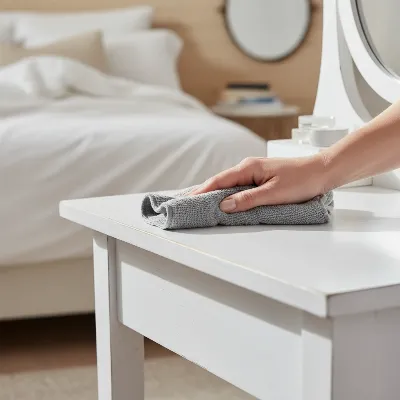 A soft microfiber cloth gently dusting a white wood vanity table, removing light surface dust.
 - General Cleaning (Mild Soap Solution):
- Mix a few drops of mild dish soap (e.g., Dawn) with warm water in a spray bottle or bowl. Avoid using too much soap, as residue can dull the finish.
- Slightly dampen a clean, soft microfiber cloth with the solution. Wring out excess water until the cloth is barely damp.
- Gently wipe down the vanity table surface, working in small sections. Always wipe in the direction of the wood grain if discernible, or gently over the painted surface.
- Immediately follow with a second clean, dry microfiber cloth to thoroughly dry the surface. Do not let water sit on the wood, as it can cause swelling or damage to the painted finish.
- Avoid abrasive cleaners, scour pads, or harsh chemicals (like ammonia, bleach, or aggressive household sprays) as these can strip the paint, cause yellowing, or leave permanent streaks and dullness.
- Spot Cleaning Stubborn Stains (Makeup, Ink):
- Makeup Stains: For liquid foundation, mascara, or eyeliner, try the mild soap solution first. If persistent, a small amount of rubbing alcohol (isopropyl alcohol) dabbed onto a cotton swab can be effective. Always test on an inconspicuous area first. Apply to the stain, let it sit for a few seconds, then gently blot away. Follow with a damp cloth to remove residue and dry immediately.
- Ink Marks: For fresh ink, rubbing alcohol on a cotton swab can work. For older or tougher ink stains, a tiny amount of non-gel toothpaste (not whitening toothpaste with abrasives) rubbed gently with a finger, then wiped clean, can sometimes lift the mark. Again, test first.
- Magic Eraser (Use with Extreme Caution): A Mr. Clean Magic Eraser can remove very stubborn marks, but it acts like a fine abrasive. Use it sparingly and with the lightest possible touch, only on the stained area, and test first. Rubbing too hard or too much can remove the paint finish, leaving a dull spot.
- Dealing with Yellowing:
- White wood can sometimes yellow over time due to sun exposure or chemical reactions with cleaning products. Ensure you are not using harsh cleaners.
- For light yellowing, a thorough clean with the mild dish soap solution, followed by drying in a well-ventilated area, might help slightly.
- If the yellowing is significant and widespread, it may indicate a degradation of the paint finish itself, which can only be truly remedied by repainting or refinishing the piece. Prevention through proper cleaning and avoiding direct, prolonged sunlight is the best strategy.
Arranging Makeup and Products Neatly
A cluttered vanity is harder to clean and less enjoyable to use.
- Use Organizers: Invest in clear acrylic trays, drawer dividers, and makeup brush holders. These keep items separated, visible, and prevent spills from directly contacting the vanity surface.
- Declutter Regularly: Dispose of expired makeup or products you no longer use. A clean slate makes organization easier.
- Contain Liquids: Keep liquid makeup, nail polish, and perfumes on a tray or placemat to catch accidental spills, protecting the white wood finish.
Protecting Your Vanity from Damage
Preventative measures are your best defense against damage.
- Avoid Direct Sunlight: Prolonged exposure to direct sunlight can cause white wood to yellow or fade over time. Position your vanity away from windows or use curtains/blinds to diffuse intense light.
- Control Humidity: Extreme fluctuations in humidity can cause wood to warp or crack. Use a humidifier or dehumidifier if your room experiences significant changes.
- Use Protective Barriers: Always place coasters under drinks, use placemats or vanity trays under perfumes, jewelry, and frequently used makeup items. This creates a barrier against spills, heat, and scratches.
- Handle with Care: Be mindful when placing or moving heavy items. Avoid dragging objects across the surface to prevent scratches.
> “The secret to a lasting white wood vanity isn’t just about cleaning, it’s about consistent, gentle protection. Think of it as guarding a prized possession.” – Sarah Chen, Interior Design Consultant at LuxeSpaces
Timely Minor Repairs
Address small issues promptly before they escalate.
- Minor Scratches: For superficial scratches on white painted wood, a white paint touch-up pen or a small artist’s brush with matching white paint can often conceal the mark.
- Loose Hardware: Tighten loose knobs or drawer pulls with a screwdriver to prevent them from falling off or damaging the wood.
- Chipped Paint: For small chips, gently sand the edges with very fine-grit sandpaper, clean the area, and apply a thin layer of matching white paint, blending carefully.
By integrating these cleaning and maintenance tips into your routine, your white wood vanity table will remain a beautiful, functional centerpiece for many years, reflecting not just your image, but also your meticulous care.
Conclusion
Your white wood vanity table is more than just a piece of furniture; it’s a personal sanctuary where beauty rituals unfold. Keeping it spotless, especially its delicate white finish, ensures it remains a source of joy and elegance in your home. By embracing regular dusting, gentle cleaning with mild solutions, and smart preventative measures like using organizers and protective barriers, you can effortlessly maintain its pristine condition. Remember, the key is consistency and avoiding harsh treatments that can irreversibly damage the surface.
Are you ready to transform your daily routine into an art of meticulous care? What is your biggest challenge in keeping your vanity table looking flawless?
Frequently Asked Questions
What causes white wood furniture to yellow over time?
White wood furniture can yellow due to exposure to UV light (sunlight), which degrades the paint or finish. It can also be caused by certain chemicals in cleaning products, smoke, or even the natural aging of the wood or paint itself. Using appropriate, mild cleaning solutions and minimizing direct sunlight exposure helps prevent this.
Can I use household bleach to whiten a yellowed vanity table?
No, it is strongly advised not to use household bleach on white wood Vanity Tables. Bleach is a harsh chemical that can strip paint, weaken wood fibers, and cause further discoloration or uneven patches, permanently damaging the finish rather than restoring its whiteness. Stick to mild soap and water solutions.
How do I remove stubborn makeup stains from a white vanity without damaging the paint?
For stubborn makeup stains like foundation or mascara, begin with a slightly damp cloth with mild dish soap. If that doesn’t work, dab a small amount of rubbing alcohol onto a cotton swab and gently blot the stain, testing on an inconspicuous area first. Always wipe with a clean, damp cloth and dry immediately afterward.
Is it safe to use a Magic Eraser on a white painted vanity table?
While a Magic Eraser can be effective for stubborn marks, it should be used with extreme caution on painted white wood. Magic Erasers are micro-abrasive and can remove the paint or dull the finish if rubbed too hard or too much. Test it on an hidden spot first and use only a very light touch on the stained area, then rinse and dry.
What are the best ways to protect a new white wood vanity table from future damage?
To protect your new white wood vanity, use coasters under drinks and perfumes, and vanity trays for makeup. Keep the table out of direct sunlight to prevent yellowing. Regularly dust with a soft cloth and wipe up spills immediately. Consistent, gentle care is the most effective preventative measure.