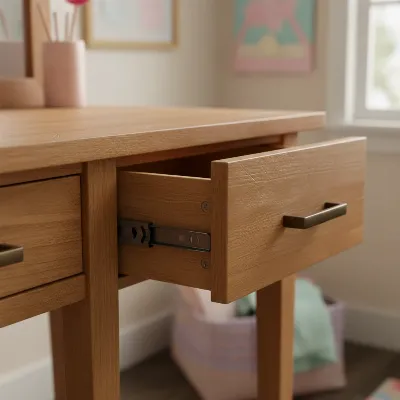
Dreaming of a chic, clutter-free beauty space that perfectly complements your home’s aesthetic? A floating vanity table offers modern elegance and invaluable space-saving benefits, transforming any room into a sophisticated haven. However, stepping into a furniture store or browsing online can quickly reveal that these sleek, minimalist pieces often come with a hefty price tag. But what if you could achieve that same high-end look and functionality without draining your wallet?
This comprehensive guide is designed to empower you to build your own stunning floating vanity table, even on a tight budget. Drawing on years of experience, we will walk you through every step, from meticulous planning and sourcing affordable materials to the construction and finishing touches. Prepare to unlock your inner DIY enthusiast and create a personalized, functional, and effortlessly stylish floating vanity that reflects your unique taste and saves you significant money.
Why a DIY Floating Vanity Table is Your Next Project
Choosing to build your own floating vanity table isn’t just about saving money; it’s about creating a piece that truly fits your space and vision, offering a blend of practical advantages and aesthetic appeal.
Space-Saving Elegance
|
Our Picks for the Best Vanity Table in 2026
As an Amazon Associate I earn from qualifying purchases.
|
||
| Num | Product | Action |
|---|---|---|
| 1 | Black,Vanity Desk with Mirror and Lights,Makeup Vanity with Power Outlet and Adjustable Cabinet,Modern Makeup Table with 3 Drawers for Bedroom Makeup Room |

|
| 2 | 47.24" Big Modern Vanity Desk with Mirror and Lights,Makeup Vanity Desk with 5 Drawers and Storage Shelves & Power Outlet,Dressing Table with Glass Top, Oak |
|
| 3 | Large Vanity Desk with 3 Color Touch Screen Dimming Mirror, Vanity Desk with Charging Station, Modern Retractable Makeup Dressing Table, Makeup Table With storage shelves and 5 Sliding Drawers, Walnut |
|
| 4 | Large Vanity Desk with 3 Color Touch Screen Dimming Mirror, Vanity Desk with Charging Station, Modern Retractable Makeup Dressing Table, Makeup Table With storage shelves and 5 Sliding Drawers, Black |
|
| 5 | SUPERJARE 35.4" White and Gold Desk with 2 Drawers, Modern Makeup Vanity with Padded Stool, Small Computer Desk Home Office Desk for Writing Study Bedroom |
|
| 6 | Vanity Desk with 29.53" HD Lighted Mirror, 47.24" Big Modern Vanity Desk with Mirror and Lights, Makeup Vanity with 5 Drawers and Storage Shelves and Charging Station, Oak2 |
|
| 7 | Kitsure Vanity Desk with Mirror and Lights - Large Capacity Makeup Vanity with 4 Fabric Storage Drawers & 3 Lighting Modes, Vanity Table Set with Sturdy Metal Frame for Bedroom, White, 35" x 17" x 52" |
|
| 8 | BOLUO Small Vanity Desk with Hollywood Mirror and Lights, Girls Vanity with Stool, Fluted Vanity Set, Compact Make Up Table with Drawers and Outlet Bedroom |
|
| 9 | 57“Makeup Vanity Desk with Mirror and Lights, Vanity Desk with 5 Drawers & Storage Shelves, Vanity Table with Power Outlet, 3 Color Modes & Adjustable Brightness Dressing Table, Bedroom,Oak |
|
| 10 | 43" Fluted Makeup Vanity Desk with 32" Mirror and Lights, Modern Glass Top Large Vanity Table with 5 Drawers and 3 Storage Shelves, Dressing Table Set with Charging Station for Bedroom-Gray |
|
Floating vanity tables are renowned for their ability to make rooms feel larger and more open. By mounting directly to the wall, they free up valuable floor space, making cleaning a breeze and contributing to a minimalist, airy aesthetic. This design is particularly beneficial in smaller bedrooms or bathrooms where every inch counts, creating an illusion of spaciousness that traditional leg-supported vanities cannot match.
Cost-Effectiveness
The most compelling reason for many DIYers is the significant cost savings. While a designer floating vanity can cost hundreds or even thousands of dollars, building your own often reduces the expense to a fraction of that. One builder managed to construct a floating wood vanity for less than $30 in lumber, excluding the sink. Another project came in at around $50 for lumber and hardware. By carefully selecting materials and doing the work yourself, you bypass labor costs and retail markups, making a high-end look accessible on a budget.
Customization Freedom
When you build it yourself, every aspect of your vanity, from its dimensions to its finish and integrated features, can be tailored precisely to your needs and preferences. This allows for a perfect fit in awkward spaces, the incorporation of specific storage solutions, and the freedom to match your existing décor or create a bold new statement. The result is a truly bespoke piece that store-bought options simply can’t provide.
Essential Planning for Your Budget-Friendly Floating Vanity
A successful DIY project begins with meticulous planning. Before cutting any wood, take the time to conceptualize your vanity, measure your space, and gather your materials and tools.
Measuring Your Space Accurately
Precision is paramount when building a floating vanity. Begin by thoroughly measuring the wall space where the vanity will be installed, noting the desired width, depth, and height. Remember to account for clearance if you plan to use a stool or chair. Equally important is identifying the location of wall studs, electrical outlets, light fixtures, and any plumbing lines if it’s for a bathroom. These elements will influence your design and mounting strategy.
Sketching Your Dream Design
Once you have your measurements, it’s time to sketch out your vanity. Will it be a simple, sleek floating shelf? Or do you envision integrated storage, such as drawers or hidden compartments, to keep your beauty essentials organized? Consider the placement of your mirror and any desired lighting, like LED strips, at this stage. A detailed sketch will serve as your blueprint, guiding your material cuts and assembly process.
Sourcing Budget-Friendly Materials
The key to a budget-friendly DIY floating vanity lies in smart material selection.
- Wood Options: Plywood, MDF (Medium-Density Fiberboard), and laminated particle board are excellent, cost-effective choices for the vanity base, offering smooth surfaces that are easy to paint or finish. Whitewood panels and scaffold boards can also be very economical and offer a rustic charm. Consider checking off-cut bins at hardware stores for smaller pieces at reduced prices.
- Mounting Hardware: For robust support, you’ll need heavy-duty brackets, a French cleat system, or lengths of 2x lumber (like 2x2s or 2x4s) to create an internal support frame securely fastened to wall studs.
- Fasteners & Adhesives: Essential items include wood glue for strong joints, various screws (e.g., 1 ¼” and 2 ½” pocket hole screws), and brad nails.
- Finishing Supplies: Paint, wood stain, or a sealant will protect your vanity and define its aesthetic. Don’t forget sandpaper for smooth surfaces and PVC edge banding for a polished finish on cut edges of laminated boards.
Tools You’ll Need
Having the right tools will make your project smoother and more enjoyable.
- Basic Tools: A drill, level, stud finder, measuring tape, and sandpaper are indispensable. You’ll also need a saw, such as a circular saw or miter saw, for precise cuts.
- Optional but Helpful: A Kreg Jig (or pocket hole jig) is excellent for creating strong, concealed joints, while a biscuit joiner can aid in alignment and strength for particle board.
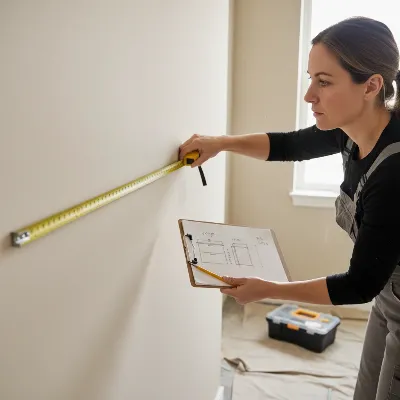 A woman carefully measuring wall space for a DIY floating vanity, holding a tape measure and a pencil against a clean, light-colored wall, with a basic sketch of the vanity on a clipboard nearby, bright natural light, realistic style
Step-by-Step Guide to Constructing Your Floating Vanity
Building your floating vanity involves several key stages, from preparing the wood to securing it firmly to the wall and adding the final touches. Following these steps carefully will ensure a professional and durable result.
Step 1: Prepare Your Wood Components
Begin by cutting all your chosen wood materials (plywood, MDF, whitewood, etc.) to the precise dimensions outlined in your design sketch. A circular saw or miter saw will provide the cleanest cuts. Once cut, thoroughly sand all edges and surfaces to achieve a smooth finish, removing any splinters or rough patches. This preparation is crucial for a professional look and feel.
Step 2: Assemble the Vanity Carcass (if applicable)
If your design includes a box-like structure or drawers, this is the stage to assemble the main carcass. Use strong wood glue on all joining surfaces and reinforce with screws. Pocket hole screws, created with a Kreg Jig, are ideal for strong, concealed joints. For laminated particle board, consider using biscuit joints for added strength and alignment. Ensure all corners are square and the assembly is robust, as this forms the foundation of your vanity. For vanities with drawers, install the drawer slides at this point, ensuring they are perfectly level and aligned.
Step 3: Create a Secure Wall Mounting System
The stability of your floating vanity hinges on its mounting system. First, use a stud finder to locate and mark the wall studs, as these provide the most secure anchor points. For added support, especially if studs aren’t ideally placed, you may need to install timber nogs (horizontal support beams) between existing studs within the wall.
You have several options for mounting:
- Lumber Support Frame: A common method involves building a sturdy frame from 2×2 or 2×4 lumber that will be hidden inside or directly underneath the vanity. This frame is securely screwed into the wall studs, and the vanity then slides over or attaches to it.
- Heavy-Duty Brackets: Robust L-shaped brackets can be directly screwed into wall studs. Ensure these brackets are rated for the weight of your vanity and its contents.
- French Cleat System: This involves two pieces of wood cut at a 45-degree angle. One piece is securely mounted to the wall studs with the angled edge facing up and out, while the other is attached to the back of the vanity with the angled edge facing down and in. The vanity then simply hooks onto the wall piece.
Whichever method you choose, use a laser level or spirit level to ensure the mounting system is perfectly horizontal before securing it.
Step 4: Mount the Vanity to the Wall
With your mounting system in place, carefully lift and attach your assembled vanity. If using a lumber support frame, slide the vanity over the frame and secure it from the bottom with screws, driving them up into the frame. For brackets or a French cleat, ensure the vanity sits snugly and securely. Double-check for stability by gently testing the weight and ensuring there is no wobble. This step might require a helper due to the size and weight of the vanity.
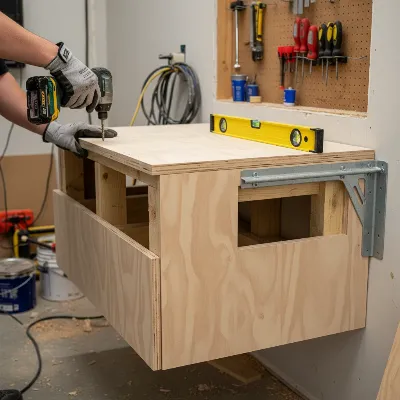 A close-up view of a DIY floating vanity being securely mounted to a wall. A person's hands are visible, operating a drill to fasten the vanity to a hidden support frame or brackets, with a level placed on the vanity surface to ensure precision, workshop setting, realistic photo
Step 5: Apply Finishing Touches
This is where your vanity truly comes to life.
- Sanding and Filling: Fill any visible screw holes or imperfections with wood filler, allow it to dry, and then sand the entire vanity one last time with fine-grit sandpaper for a silky-smooth surface.
- Painting/Staining/Sealing: Apply primer (if painting), followed by your chosen paint, stain, or protective sealant. For areas prone to moisture, such as a bathroom, a water-resistant finish is crucial for durability. Apply multiple thin coats for the best results, sanding lightly between coats.
- Hardware and Accessories: Install any drawer fronts, handles, knobs, or hinges. If you’re adding lighting, such as LED strips, adhere them discreetly for a sophisticated glow. For laminated particle board, apply PVC edge banding to all exposed edges for a clean, finished look.
Elevate Your DIY Vanity: Smart Tips and Tricks
Building the basic structure is just the beginning. With a few clever ideas, you can enhance both the functionality and aesthetics of your DIY floating vanity without overspending.
Clever Storage Solutions
Even a simple floating shelf can be transformed into a highly functional vanity with smart storage additions.
- Inexpensive Drawer Organizers: Maximize the space within drawers by using modular organizers or repurposed containers to keep makeup, brushes, and accessories neatly separated.
- Wall-Mounted Solutions: Install small, inexpensive wall-mounted shelves above or beside your vanity for extra storage. Magnetic strips can be incredibly useful for holding metal tools like tweezers or hairpins, keeping your tabletop clutter-free.
- Decorative Baskets: For open-shelf designs, decorative baskets can hide clutter while adding a touch of texture and style. They are also easy to pull out and access.
Personalizing Your Style on a Dime
Infuse your personality into your vanity without breaking the bank.
- Peel-and-Stick Wallpaper: Adhere a stylish peel-and-stick wallpaper to the drawer fronts or the vanity’s sides for a pop of pattern or color. It’s affordable, easy to apply, and reversible if your style changes.
- DIY Mirror Frame: Create a custom mirror frame from scrap wood, painted to match or contrast your vanity, instead of buying an expensive pre-framed mirror.
- Upcycled Hardware: Scout flea markets, antique shops, or online marketplaces for unique, upcycled knobs and pulls. These small details can add significant character at a minimal cost.
Ensuring Long-Term Durability
To make your DIY floating vanity last, focus on protection and maintenance.
- Proper Sealing: Especially for wood surfaces, ensure proper sealing or a durable paint finish to protect against moisture, spills, and daily wear and tear. This is critical for bathroom vanities.
- Regular Checks: Periodically inspect the mounting system for any signs of loosening or instability. Tighten screws as needed to maintain a secure fixture.
Maintaining Your Beautiful DIY Floating Vanity
Once your floating vanity is complete, a little care will go a long way in preserving its beauty and functionality for years to come.
Regularly wipe down surfaces with a soft, damp cloth to remove dust and makeup residue. For deeper cleaning, use a mild, non-abrasive cleaner suitable for your vanity’s finish. Protect the surface from heat damage by using coasters under hot styling tools and immediately wipe up any spills to prevent water damage or staining. Periodically, check the mounting hardware to ensure all screws are tight and the vanity remains securely affixed to the wall, guaranteeing long-term stability and safety.
Conclusion
Building a DIY floating Vanity Table on a budget is an incredibly rewarding project that combines style, functionality, and significant cost savings. By embracing a minimalist aesthetic, you not only declutter your space but also gain the immense satisfaction of creating a bespoke piece tailored precisely to your needs. This guide has shown that with careful planning, smart material choices, and a step-by-step approach, even a beginner can achieve a high-end look without the high-end price tag. Your new floating vanity will not only elevate your home’s décor but also serve as a testament to your creativity and resourcefulness.
So, are you ready to transform your space? What unique design elements will you add to make your DIY floating vanity truly yours?
Câu Hỏi Thường Gặp
How much does it cost to build a DIY floating vanity?
The cost of a DIY floating vanity can vary significantly based on materials and complexity, but many projects range from under $30 for basic wood to around $50 for lumber and hardware, with more elaborate designs using plywood and vessel sinks costing up to $300-$400. Sourcing reclaimed materials or opting for inexpensive wood species helps keep costs down.
What materials are best for a budget-friendly floating vanity?
For a budget-friendly floating vanity, excellent material choices include plywood, MDF (Medium-Density Fiberboard), and laminated particle board, which are affordable and offer smooth surfaces for finishing. Whitewood panels or even reclaimed scaffold boards can also be used for a rustic or minimalist look.
Can a beginner build a floating vanity table?
Absolutely. Many DIY floating vanity projects are designed to be accessible for beginners, especially those involving simple shelf designs or basic box constructions. Detailed plans, online tutorials, and readily available tools make this an achievable and rewarding project for those new to woodworking.
How do I ensure my floating vanity is sturdy?
To ensure your floating vanity is sturdy, always mount it directly into wall studs using appropriate heavy-duty brackets, a French cleat system, or a robust internal lumber support frame. Use strong wood glue and ample screws for all joints, and verify levelness and stability thoroughly during installation.
What’s the best way to hide cables for lighting on a DIY floating vanity?
To hide cables for lighting on a DIY floating vanity, you can route them through discreet channels cut into the back or underside of the vanity, or run them along the inside of drawers or compartments. Self-adhesive cable clips or small cable management boxes can secure and conceal wires, maintaining a clean, minimalist aesthetic.